Install  LibreWolf on
  Raspberry Pi
LibreWolf
A custom version of Firefox, focused on privacy, security and freedom.
Note: This is not the LibreWolf arm64 appimage. Installing from here will install LibreWolf to your system as a native app with best performance.
To run: Menu -> Internet -> LibreWolf
To run in a terminal: /opt/librewolf/librewolf
Fortunately, LibreWolf is very easy to install on your Raspberry Pi in just two steps.
- Install Pi-Apps - the best app installer for Raspberry Pi.
- Use Pi-Apps to install LibreWolf.
Compatibility
For the best chance of this working, we recommend using the latest 64-bit version of Raspberry Pi OS, which is currently version Trixie.
Raspberry Pi OS has 32-bit and 64-bit variants, both of which will run on most Raspberry Pi computers, including the Pi 3, Pi 4, and Pi5.
LibreWolf will only run on PiOS 64-bit. Pi-Apps will not let you install LibreWolf on PiOS 32-bit.
Install Pi-Apps
Pi-Apps is a free tool that makes it incredibly easy to install the most useful programs on your Raspberry Pi with just a few clicks.
Open a terminal and run this command to install Pi-Apps:
wget -qO- https://raw.githubusercontent.com/Botspot/pi-apps/master/install | bashFeel free to check out the Pi-Apps source code here: https://github.com/Botspot/pi-apps
Install LibreWolf
Now that you have Pi-Apps installed, it is time to install LibreWolf.
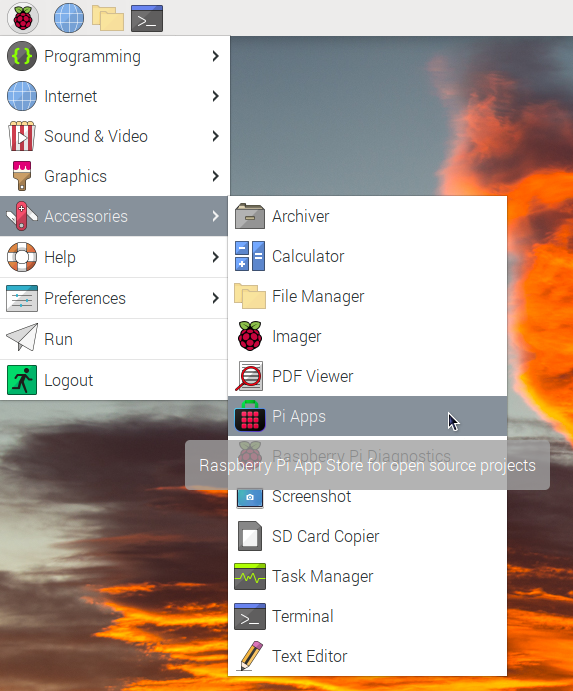
First launch Pi-Apps from your start menu:
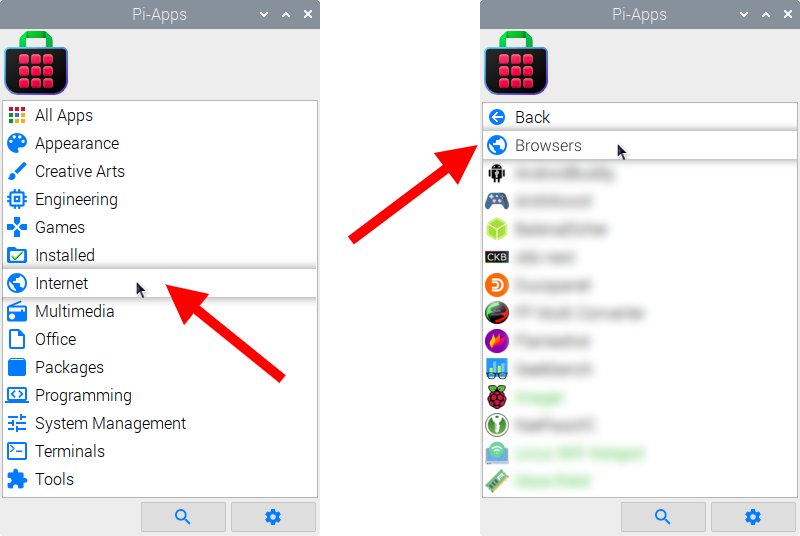
Then click on the Internet category, which leads to the Browsers category.
Now scroll down to find LibreWolf in the list.
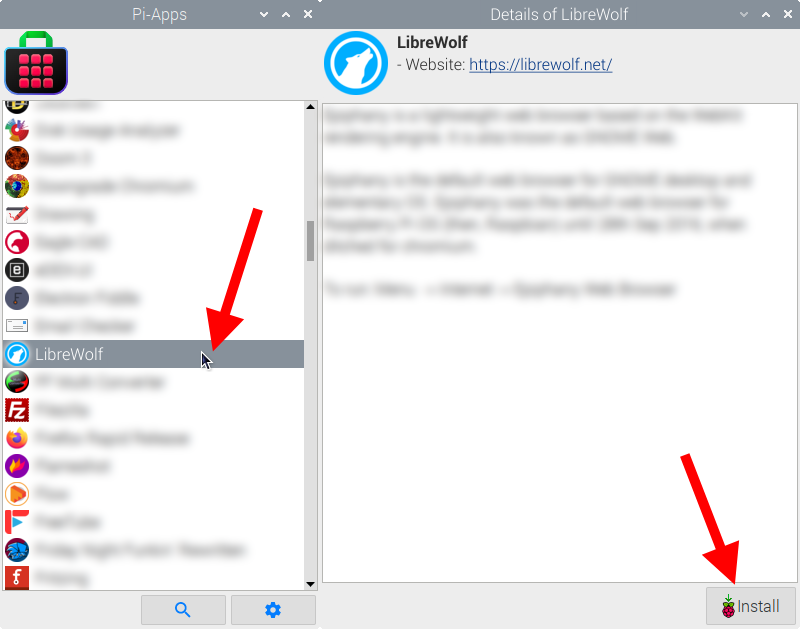
Just click Install and Pi-Apps will install LibreWolf for you!
Pi-Apps is a free and open source tool made by Botspot, theofficialgman, and other contributors. Find out more at https://pi-apps.io